When Love Becomes Control: How Well-Meaning Families Destroy Recovery
The road to hell is paved with good intentions and nowhere is this truer than in addiction recovery.
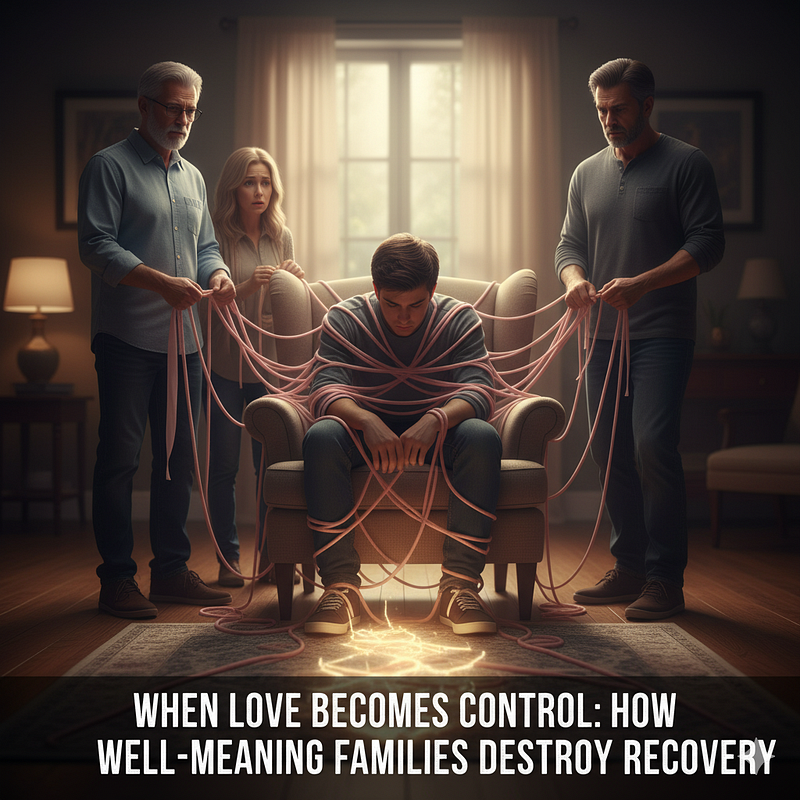
The road to hell is paved with good intentions and nowhere is this truer than in addiction recovery.
They arrive with clipboards and conviction. The aunts, the cousins, the concerned family friends who’ve watched one too many episodes of Intervention. They’ve got phone numbers for the best rehab centres, printed articles about tough love and a burning certainty that they know exactly what needs to be done.
What they don’t realise is that in their desperate need to save someone they’re often destroying the very person they claim to love.
The Cruel Mathematics of Over-Helping
Here’s what the well-meaning helpers don’t understand: addiction recovery isn’t a mathematical equation where more intervention equals better outcomes. In fact, research consistently shows the opposite. When families micromanage every aspect of recovery they strip away the two things most critical to lasting sobriety autonomy and self-efficacy.
Think of it this way: imagine someone following you around all day making every decision for you cushioning every consequence and then expecting you to suddenly develop the strength to stand on your own. It’s not just counterproductive it’s psychologically damaging.
The addict emerges from this controlled environment carrying wounds that extend far beyond their original addiction: profound guilt for needing help, crushing shame from failing under constant supervision and a chronic inability to trust their own judgement. They’ve been saved from everything except learning how to save themselves.
The Family That Breaks Together
But here’s the part nobody talks about in those glossy intervention success stories: the family doesn’t escape unscathed either. Over-helping creates a toxic ecosystem where everyone becomes addicted to control, to being needed and to the drama of crisis management.
Siblings stand on the sidelines watching their own needs get buried under the avalanche of attention directed at the family’s “problem child.” They learn that love is conditional that you only matter when you’re broken. Partners feel trapped in relationships that revolve entirely around crisis management. Even the parents become dependent on the rush of being indispensable the validation that comes from being the hero in someone else’s story.
The resentment builds like sediment in a river invisible at first but eventually choking the life out of everything downstream. The addict resents being treated like a child. The family resents the addict for relapsing despite all their “sacrifices.” Christmas dinners become minefields. Birthday celebrations carry the weight of unspoken accusations.
This resentment doesn’t fade with time it becomes the family’s toxic inheritance, passed down through generations like a cursed heirloom.
When addiction specialists talk about relapse rates they’re not describing personal failures they’re documenting the predictable outcomes of recovery approaches that ignore fundamental human psychology. You cannot micromanage someone into lasting sobriety any more than you can micromanage someone into genuine happiness.
Yet families, armed with the best intentions and the worst strategies continue to tighten their grip with each relapse. They add more rules more oversight more consequences. They mistake control for care, supervision for support.
The addict, stripped of agency and drowning in shame often relapses not despite the help but because of it. They’ve never learned to navigate recovery as a choice they’ve made only as a performance they’re giving for an increasingly demanding audience.
The Cruelest Cut of All
Perhaps the most heartbreaking aspect of this dynamic is how families can provide everything except the one thing that actually matters: unconditional love and genuine human connection.
They’ll arrange the best treatment programmes, research the most effective therapeutic approaches enforce strict accountability measures. They’ll move mountains to address every practical aspect of recovery whilst completely overlooking the emotional foundation that makes recovery sustainable.
The addict walks through this elaborate support system feeling more isolated than ever. They’re surrounded by people who claim to love them yet they can’t shake the feeling that this love is entirely conditional dependent on their sobriety, their compliance, their gratitude.
Where’s the embrace that says, “I love you exactly as you are not as I need you to become”? Where’s the voice that whispers “Your worth isn’t determined by your recovery progress”? Where’s the person who shows up not to fix or manage or improve but simply to be present?
Often, that person doesn’t exist. The addict is drowning in help whilst starving for love.
The helpers those well-meaning relatives and friends face their own painful truth. They invest enormous amounts of time, energy and emotion into “saving” someone. When recovery goes well they naturally feel proud of their contribution. “We did everything right,” they tell themselves. “Look how well our approach worked.”
But when relapse occurs when the addict struggles or falls apart again these same helpers quickly shift the narrative. Suddenly, it’s not their approach that failed it’s the addict who wasn’t grateful enough, who didn’t work hard enough, who didn’t appreciate the sacrifice made on their behalf.
This dynamic allows families to claim credit for successes whilst avoiding responsibility for failures. It’s a psychological shell game that protects the helper’s ego whilst devastating the person who needed genuine support not conditional assistance.
Love Without Conditions Support Without Strings
Research in addiction psychology consistently demonstrates that the most effective support comes from relationships characterised by unconditional positive regard a fancy way of saying “I love you no matter what.” This doesn’t mean enabling destructive behaviour or avoiding difficult conversations. It means creating a foundation of unwavering acceptance upon which genuine healing can occur.
This kind of love doesn’t come with clipboards or ultimatums. It doesn’t require progress reports or compliance checks. It shows up consistently, offers presence rather than solutions and proves over and over that the person’s worth isn’t contingent on their performance.
When addicts feel genuinely loved not managed, not fixed, not improved but truly accepted they develop the internal security necessary to choose recovery for themselves rather than as a performance for others.
The Questions That Matter
For families currently trapped in this cycle of over-helping, the path forward requires honest self-reflection. Ask yourself: Are you trying to save this person? or are you trying to save yourself from the discomfort of witnessing their struggle?
Are you providing the kind of support that builds strength and autonomy? or are you creating dependency disguised as care?
When you imagine their recovery, do you see them thriving independently? or do you see them remaining grateful and dependent on your continued involvement?
Most importantly: If you stripped away all your practical help the phone calls to treatment centres, the research into programmes, the enforcement of consequences would this person still feel genuinely loved and valued by you?
The Hardest Love of All
Sometimes the most loving thing you can do is step back. Not abandon, not reject, not punish but trust. Trust that the person you love is capable of making their own choices, even if those choices sometimes lead to pain. Trust that your job isn’t to prevent all consequences but to provide a safe harbour when the storms inevitably come.
This doesn’t mean you become passive or indifferent. It means you transform from a manager into a witness from a fixer into a supporter from someone who loves conditionally into someone who loves completely.
The addict doesn’t need another expert telling them what to do. They need a human being who can sit with them in their pain without trying to eliminate it who can celebrate their victories without claiming credit and who can weather their failures without withdrawing affection.
They need someone brave enough to love them without strings attached even when that feels like the most terrifying thing in the world.
Recovery is not a family project. It’s an individual journey that can be supported by genuine love but cannot be controlled by good intentions.
The families who understand this who learn to love without managing support without controlling hope without demanding often find that they’ve not only given their addicted loved one the greatest gift possible but they’ve also freed themselves from the exhausting burden of trying to control the uncontrollable.
In the end, perhaps the question isn’t how to help someone recover from addiction. Perhaps it’s how to love someone so completely that they remember they’re worth recovering for not because you need them to but because they deserve to.
That kind of love doesn’t come with conditions. It doesn’t require progress reports. It doesn’t take credit or assign blame. It simply shows up, day after day proving that some things in this world are indeed unconditional.
And sometimes, that’s exactly the miracle someone needs to find their way home to themselves.