The Warning Signs Are All Around Us
Imagine it’s 2035. You wake up in Blacktown, not to the sound of birds, but to the hum of an overworked generator from down the street a…
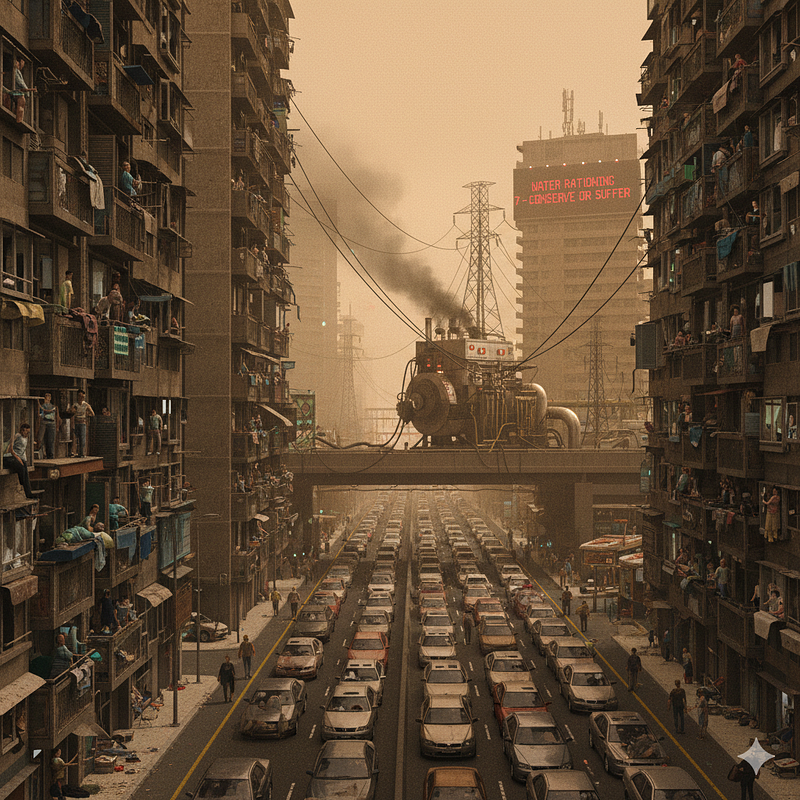
Imagine it’s 2035. You wake up in Blacktown, not to the sound of birds, but to the hum of an overworked generator from down the street a sound that has become the suburb’s new morning chorus. You’re in a cramped apartment you share with another family because the rental market didn’t just become expensive; it evaporated years ago, leaving a generation of locals locked out. The morning news on your phone, flickering on a precious bar of battery is a stream of red alert warnings: Level 5 water restrictions, rolling blackout schedules for the day and reports of another stalled train on the T1 line.
A trip from your home in Lalor Park to visit a mate in Penrith isn’t a 20 minute drive; it’s a two hour strategic crawl on an M4 that has become a permanent car park, a river of stationary steel and simmering frustration. This isn’t a scene from a dystopian movie. This is the future staring Western Sydney in the face if we continue on our current path of high growth and low investment.
This isn’t just about numbers on a spreadsheet; it’s about the future for our generation, Jack the one that grew up with the promise of the Australian dream. For the families who have built their lives in Parramatta, Liverpool and Campbelltown who have watched these communities grow from quiet suburbs into sprawling cities, this isn’t an abstract problem. It’s a slow motion crisis unfolding on our doorsteps a theft of the quality of life our parents took for granted. It’s the quiet erosion of the community spirit that once defined the West.
The Perfect Storm: A Region Under Pressure
So how did we get here? It’s not one single issue but a perfect storm of rapid population growth hitting a wall of decades long infrastructure neglect and political short sightedness. This is a story of broken promises piling up until the foundations began to crack.
According to NSW Treasury forecasts Western Sydney’s population is set to absorb nearly two thirds of the city’s growth, swelling towards 3.5 million people by 2041. To put that in perspective, that’s like adding the entire current population of Brisbane to one part of Sydney without adding a new city’s worth of infrastructure. Last year alone, Australia’s population grew by over 600,000 people with net overseas migration being the primary driver. This surge in demand is overwhelming a system that was built for a different era and was never designed to cope with such intense concentrated pressure.
The most immediate casualty is housing. The Grattan Institute has highlighted the direct link: for every 1% increase in population housing prices can rise by nearly as much. We’re seeing the brutal maths of that play out in real time, creating a social catastrophe. It manifests as rental bidding wars where desperate families offer half their income for a mouldy apartment as eviction notices become a constant threat and as young people see the dream of owning a home not just as difficult, but as a cruel joke. This isn’t just a market failure; it’s the direct result of planning policies that have encouraged population concentration without mandating the necessary housing supply and diversity.
Cascading Failure: When the System Breaks
The strain doesn’t stop at housing. Like a fault line the pressure radiates outwards ripping through every essential service and creating a cascade of interconnected failures. The West is being set up for a systemic collapse where one broken part triggers the failure of the next.
Infrastructure Gridlock: Our road and rail networks are already past their limits. Transport for NSW’s own modelling shows that key arteries like the M4 between Westmead and Mount Druitt are heading towards “permanent peak hour.” It’s a simple equation: when you add hundreds of thousands of cars without a proportional investment in high frequency public transport the entire region grinds to a halt. This isn’t just an inconvenience; it paralyses our economy as businesses lose billions in productivity. More critically, it paralyses our emergency services. A five minute delay for an ambulance responding to a heart attack or a fire truck heading to a house fire is the difference between life and death.
Power and Water Insecurity: The summer of 2024 gave us a preview of our energy future with blackout warnings becoming routine. Our electricity grid already strained by ageing infrastructure is ill equipped to handle the surge in demand from millions of new homes, especially during the increasingly frequent and intense heatwaves predicted by the Bureau of Meteorology. At the same time, reports from Infrastructure Australia have repeatedly warned that Sydney’s water supply reliant on a rainfall dependent Warragamba Dam is not secure. A rising population and the real threat of prolonged drought mean that severe water rationing isn’t a distant threat; it’s a looming probability that will turn our green suburbs into dust bowls.
The human cost of this systemic failure is immense. It’s the daily grinding anxiety of a flickering power grid, the stress of a four hour daily commute that steals time from your family and the terrifying fear that when you call for help it might not arrive in time. It is the slow, corrosive decay of a functional society.
A Crossroads, Not a Cliff: A Blueprint for a Better West
This dystopian future is not inevitable. We are not the Maya, doomed to watch our civilisation crumble under its own weight. We are a community at a crossroads with the power to choose a different path. A future of managed growth, smart investment and sustainable living is within our reach but it requires courage, political will and a radical shift in thinking away from the short termism that has defined the last thirty years.
Screaming “stop the growth” is a simple slogan, but the reality is more complex. We need a sophisticated multi pronged approach that manages pressure while building resilience:
A National Population Strategy: It is time for a mature, non partisan conversation that directly links our migration intake to our demonstrated capacity to house, service and employ new arrivals. This isn’t about closing doors but about smart management. It means ensuring that growth is a national asset not a localised burden by using incentives to steer settlement towards regional areas that are crying out for people and investment.
Unlocking a Housing Revolution: We must move beyond the failed model of endless greenfield sprawl and poorly planned socially isolating high rises. State and local governments need to aggressively reform zoning laws to fast track the “missing middle” terraces, townhouses and low rise apartment blocks in areas well serviced by public transport. This provides diverse housing options, creates more vibrant communities and is far more sustainable than paving over our remaining farmland.
A “Future Proof the West” Infrastructure Fund: We can no longer afford to play catch up. We need a dedicated long term infrastructure fund seeded by federal and state governments and mandatory developer contributions, to build the hospitals, schools, rail lines and water recycling plants before a population surge arrives not a decade after. This is not spending; it is a critical investment in our economic future and social cohesion.
Investing in a thriving Regional Australia: The best way to relieve the pressure on Western Sydney is to make regional cities like Orange, Dubbo and Wagga Wagga genuine magnets for talent and families. This requires more than just rhetoric; it demands transformative investment in high speed rail connections to make commuting viable, decentralised government departments to create anchor jobs and world class health and education facilities to rival those in the capital cities.
This is our home. The future of the kids playing in the parks of Doonside, the students at Western Sydney University and the families who have laid down roots here depends on the choices we make today. The warning signs are clear. It’s time to stop sleepwalking toward a crisis and start building a better more resilient future for the heartland of Australia.