The Intuitive’s Field Guide: Your Inner Senses Are Already Speaking Here’s How to Finally Listen
Stop waiting for lightning bolts. Your intuition has been texting you this whole time.
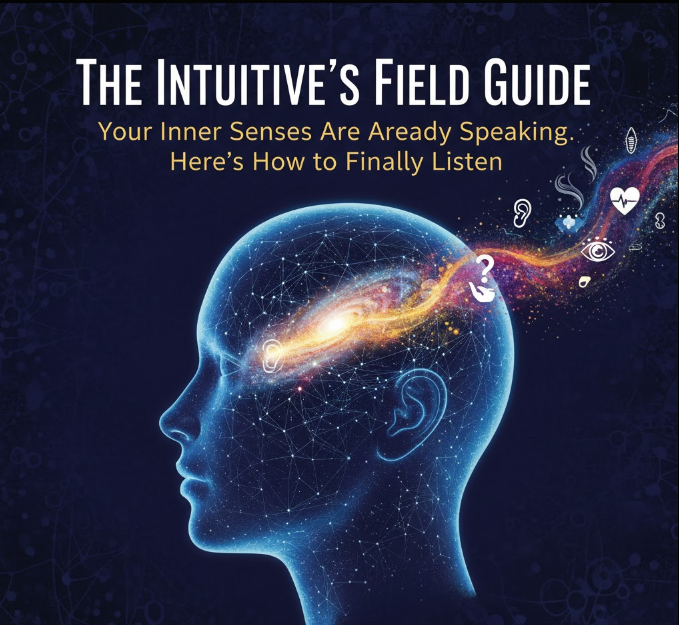
Stop waiting for lightning bolts. Your intuition has been texting you this whole time.
Created by Cameran Quinn
You know that feeling when your phone buzzes and you somehow know who it is before you look? Or when you walk into a room and immediately sense something’s off, even though everything looks normal? That’s not magic. That’s not a superpower reserved for mystics on mountaintops. That’s your intuition doing exactly what it’s designed to do.
The problem is nobody ever gave you the user manual.
We spend years learning to read, write and do algebra but somehow we never get taught how to decode the language our own inner guidance system is constantly speaking. This guide changes that. Consider this your crash course in a skill you’ve actually been using your entire life without realising it.
Your Nervous System Is the Antenna
Before we dive into the specific ways intuition communicates you need to understand something fundamental about how this whole system works. Your body isn’t just a vehicle carrying your brain around. It’s the actual receiver for intuitive information and just like any receiver it needs to be maintained.
Think about trying to listen to your favorite song on a radio with a dying battery and terrible reception. You might catch a few notes here and there but mostly you’re getting static and frustration. Your intuitive senses work exactly the same way. When you’re exhausted, dehydrated or running on fumes the signal gets muddy. This isn’t about being perfect or living like a monk. It’s about recognising that if you want clear information you need to give your system the basics: water, rest and moments of actual stillness.
Here’s something that might surprise you: one of the most powerful tools for clearing your intuitive channel isn’t meditation or crystals or any elaborate ritual. It’s laughter. Genuine belly-shaking laughter does more to reset your energy field than almost anything else because it breaks up stagnant patterns and reminds you not to take everything so seriously. Your intuition flows more freely when you’re relaxed and open, not when you’re gripping the steering wheel with white knuckles trying to force an answer.
There’s also a crucial habit you need to develop if you want to strengthen this skill. When you get an intuitive hit that first flash of knowing or feeling write it down immediately. Don’t wait. Don’t edit it. Don’t let your logical mind jump in and start explaining why that couldn’t possibly be right. Your first impression is the raw data. The second thought is usually your ego trying to make sense of it or talk you out of it. If you want to learn your intuitive language you need to capture those first impressions before they get filtered through your mental committee of doubters.
The Six Channels: How Your Intuition Actually Talks to You
Your intuition isn’t limited to one way of communicating. It’s more like a multilingual friend who knows which language you understand best and tends to use that one most often. Some people are natural “feelers” while others get clear mental images or sudden flashes of knowing. Understanding your dominant channel is like finally getting subtitles in your native language.
Claircognisance: When You Just Know
Have you ever had an answer pop into your head fully formed like someone just dropped a file directly into your brain? That’s claircognisance and it’s probably the most confusing intuitive sense because there’s no obvious source. One moment you don’t know something and the next moment you absolutely do with complete certainty even though you can’t explain how you got there.
Imagine you’re trying to decide between two job offers. You’ve made pro and con lists, you’ve talked to friends, you’ve analysed the salaries and benefits until your eyes cross. Then, while you’re in the shower thinking about something completely different you suddenly just know which one is right. There’s no debate in your mind. The answer is simply there, solid as a stone.
The tricky part with claircognisance is learning to distinguish it from wishful thinking or anxiety-driven overthinking. Here’s the key difference: wishful thinking feels hopeful but shaky like you’re trying to convince yourself. Anxiety feels urgent and usually comes with a list of terrible “what-ifs.” True claircognisance feels calm, neutral and unshakable. It’s not emotional. It just is.
Try this experiment: The next time you face a decision before you do any research or ask anyone’s opinion sit quietly and ask yourself the question. Write down the very first answer that comes to mind. Then go ahead and do all your normal analysing and discussing. Make your decision however you usually would. But keep that first answer. Over time, start checking back on which one turned out to be right more often. You might be shocked to discover your “sudden knowing” has a better track record than your careful deliberation.
Clairsentience: Your Body Is Speaking in Feelings
This is the sense most people are already familiar with even if they don’t know the formal name for it. When you walk into a party and immediately feel uncomfortable for no logical reason that’s clairsentience. When you meet someone new and feel an instant warmth or an instant recoil that’s clairsentience. When you’re considering a decision and your stomach drops or your chest feels tight that’s your body giving you information.
The challenge with being clairsentient is learning to distinguish between your own emotions and the emotional energy you’re picking up from others. If you’re someone who feels everything intensely, you might actually be functioning like a human radio tower constantly receiving broadcasts from everyone around you. This is why crowds can be so exhausting for some people. They’re not just dealing with their own internal state they’re processing everyone else’s too.
Here’s a powerful technique for sorting this out: when you suddenly feel an emotion that seems to come out of nowhere or that feels disproportionate to what’s actually happening ask yourself out loud “Is this feeling mine?” The simple act of asking the question often creates enough separation that if the feeling isn’t yours it will immediately lessen or lift. It’s like you’re giving your system permission to stop holding onto emotional data that doesn’t belong to you.
After you’ve been in situations where you were absorbing a lot of energy after a difficult conversation, a crowded shopping trip or a long day at work you need to deliberately break those energetic connections. This doesn’t require anything complicated. Run your hands under cold water for thirty seconds. Stomp your feet firmly on the ground. Take a shower and visualise any energy that isn’t yours washing down the drain. These physical actions help reset your system so you’re not carrying other people’s stress, sadness or anxiety home with you like invisible baggage.
Clairvoyance: The Inner Cinema
When people think about psychic abilities this is usually what they picture: seeing visions, receiving images, witnessing scenes play out in the mind’s eye. The reality is much more subtle than Hollywood would have you believe. Clairvoyance typically shows up as quick flashes of imagery, symbolic pictures or brief scenes that flicker across your inner screen. Think of it less like watching a movie and more like getting shown a series of meaningful snapshots.
The images you receive aren’t always literal. Your intuition often speaks in the language of metaphor and symbol. If you see a locked chest, it might not mean there’s an actual locked chest somewhere. It might be showing you that someone is keeping secrets or that something valuable is being protected or that you need to find the right key to unlock a situation. The image is the starting point not the final answer.
This is where many people get stuck with clairvoyance. They see something and immediately jump to interpretation which can lead them astray if they interpret too quickly or too literally. The more effective approach is to describe what you see first in as much detail as possible before you try to understand what it means. When you force yourself to describe rather than interpret you’re capturing the pure data. You can analyse it later. This separation keeps your logical mind from interfering with the reception process.
Want to develop this sense more clearly? Before you go to sleep, set a clear intention: “Show me images tonight that will help me understand my visual intuitive language.” Keep a notebook by your bed. When you wake up, even if you only remember fragments write them down. Your subconscious mind and your intuitive self will start working together to give you training reels short visual sequences that help you learn your own symbolic vocabulary. Over time, you’ll begin to recognise your personal symbols and understand what they mean for you specifically.
Clairaudience: Tuning Into the Quiet Voice
This is probably the most misunderstood intuitive sense because when most people hear “clear hearing” they imagine an external voice speaking to them like another person in the room. In reality, clairaudience almost always sounds like a thought in your own mind. The difference is in the quality and texture of that thought.
Your regular internal monologue tends to be chaotic, repetitive and emotionally charged. It’s the voice that narrates your day, critiques your choices, worries about the future and rehashes past conversations. It’s busy and often anxious. The intuitive voice by contrast is remarkably calm. It’s typically brief, neutral in tone and has a certain clarity to it that your regular thoughts don’t possess. It doesn’t argue with you. It doesn’t repeat itself. It simply states something and then goes quiet.
Many people experience clairaudience as a single sentence or phrase that appears in their mind often when they’re relaxed or in a transitional state while driving, showering or just waking up. The message tends to be straightforward and sometimes startlingly specific. You might hear “Take the side street” or “Call your sister” or “Check the contract again.” The challenge is learning to recognise these moments and trust them enough to act.
Here’s a technique that helps create space for this quieter voice to be heard: hum a single note for about five or six seconds then stop abruptly. In the profound silence that follows that gap of absolute quiet, listen. Don’t strain or force it. Just be present in that stillness. That space right after you stop humming is where clairaudient messages often come through most clearly because you’ve temporarily quieted your mind’s usual chatter.
Clairalience and Clairgustance: When Smell and Taste Carry Messages
These two senses often work as a team and they’re incredibly powerful because smell and taste are so directly connected to memory and emotion in your brain. Have you ever caught a whiff of something that instantly transported you back to your grandmother’s kitchen or your childhood home? That’s the mechanism your intuition uses with these senses. Spirit or your higher self can trigger a scent or taste to deliver an entire package of information in an instant.
You might suddenly smell tobacco smoke even though no one around you is smoking and realise it’s the exact brand your grandfather used to smoke. That’s not a random sensory glitch. That’s a message, possibly indicating his presence or energy or calling your attention to something related to him or that period of your life. You might taste chocolate out of nowhere and remember it was what your best friend always shared with you during difficult times and then check your phone to discover she just texted you needing support.
The key with these senses is not to dismiss them. When you smell or taste something that has no physical source pause and ask yourself what person, place, memory or feeling it immediately connects you to. That association is usually the message itself. Your intuition is using these powerful sensory triggers to quickly convey information that might take paragraphs to explain in words.
If you want to reset these senses and check whether there’s more information coming try this: when a random scent or taste appears deliberately breathe through your mouth for a moment or take a sip of water. This physically cleanses your palate and helps you determine if the message is complete or if there’s more to receive.
The Practice: Building Your Intuitive Fluency
Understanding these channels is just the beginning. The real transformation happens when you start actively working with them in your daily life. Your intuition is like any other skill it gets stronger and more reliable with practice. The difference is you’re not learning something new. You’re remembering how to use something that’s been there all along.
Start small. Don’t wait for life-changing decisions to test your intuitive senses. Use them for mundane things. Before you check your email pause and sense whether there’s anything important waiting. Before you answer the phone notice if you have any feeling about who’s calling or what they need. When you’re choosing which route to take home pay attention to whether you feel drawn one way or another.
Keep that first-impression journal we talked about. Make it a habit. When you get intuitive hits write them down before you second-guess them. Then note what actually happened. Over time, you’ll build a personal database that shows you when your intuition is speaking clearly and when your wishful thinking is trying to masquerade as guidance.
Remember that your intuition isn’t here to run your entire life or make every decision for you. It’s a guidance system not a replacement for your free will and discernment. Think of it as a highly intelligent friend who sees things from a different perspective and can offer insights you might miss. You still get to choose what to do with the information.
The Real Secret: You Already Know How to Do This
Here’s the truth that nobody wants to hear: you don’t have a reception problem. You have a trust problem. Your intuition has been sending you clear signals your entire life. You’ve just been trained to ignore them override them or explain them away with logic.
How many times have you had a bad feeling about something ignored it and later thought “I knew I shouldn’t have done that”? How many times have you had a strong impulse to reach out to someone talked yourself out of it and then discovered they needed you right at that moment? Your intuition was working perfectly. You just didn’t honor what it was telling you.
The journey to stronger intuition isn’t about developing some mystical new ability. It’s about learning to recognise, trust and act on the wisdom that’s already flowing through you. It’s about understanding the specific language your inner guidance speaks and finally, finally learning to listen.
Your intuition has been texting you this whole time. This is your manual for understanding what it’s been saying. Now the only question is: are you ready to respond?