The Gus Lamont Case: Australia’s Most Baffling Missing Child Investigation
A comprehensive analysis of the disappearance that has defied one of the largest police searches in South Australian history

A comprehensive analysis of the disappearance that has defied one of the largest police searches in South Australian history
The Vanishing
On the evening of 27 September 2025, four-year-old August ‘Gus’ Lamont disappeared from Oak Park Station, a remote cattle property in South Australia’s harsh outback. Last seen wearing a blue T-shirt with a yellow Minion character, light grey pants, a grey sun hat and boots, Gus was playing near a mound of dirt close to the homestead around 5.00pm when his grandmother, Josie Murray (also known as Margaret Lamont), noticed him.
Just thirty minutes later, at 5.30pm he was gone.
What followed was not an immediate call to authorities, but a frantic three-hour family search of the property in gathering darkness. Police weren’t contacted until 8.30pm a delay that would become one of many troubling aspects of this case.
An Unprecedented Search Effort
South Australia Police Commissioner Grant Stevens has described the response as ‘one of the largest most intensive and most protracted searches ever undertaken by SAPOL’. The operation was staggering in scope:
- 470 square kilometres of rugged outback terrain systematically searched
- Australian Defence Force personnel deployed
- State Emergency Service volunteers mobilised
- PolAir helicopters and thermal imaging drones
- Satellite technology utilised
- Specialised Aboriginal trackers engaged
- Canine units attempting to establish scent trails
Despite this extraordinary effort across the windswept terrain of salt bush and scrub, investigators have found absolutely no trace of the missing child.
The Forensic Void: A Disturbing Anomaly
The complete absence of evidence is what makes this case so perplexing to investigators and forensic experts alike. In typical cases involving missing children in remote areas, searchers expect to find something a piece of clothing, sustained footprints, disturbance patterns in vegetation or unfortunately evidence of wildlife activity.
Here, there is nothing.
The Scent Trail That Vanished
Canine units did pick up a scent near the homestead initially, but it ‘dissipated almost instantly’, failing to establish any continuous path. This abrupt interruption suggests Gus’s movement was somehow immediately halted or altered in a way that defies normal patterns.
The Discounted Footprint
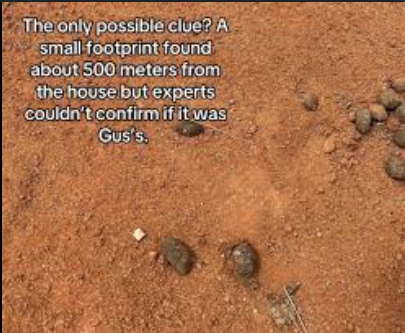
A single boot print matching Gus’s footwear was discovered approximately 500 metres from the homestead initially a promising lead. However, police later discounted this as tangible evidence, with an Aboriginal tracker determining the print could have been up to a week old.
The Absence of Scavengers
Former searcher Jason O’Connell noted something particularly chilling: the complete absence of scavenging animals. In the Australian outback, foxes and birds of prey would typically be drawn to an area if a child had succumbed to the elements. Their absence led O’Connell to conclude that Gus is simply ‘not on that property’.
Complex Family Dynamics
The investigation has been complicated by tensions within the family structure:
Geographical Separation: Gus’s father, Joshua Lamont, lived 200 kilometres away in Jamestown and was reportedly woken by police hours after his son’s disappearance an arrangement observers found unusual.
Family Tensions: Sources indicate underlying conflict between Joshua and his mother, Josie Murray, regarding the living situation at the remote station. Joshua had been actively renovating a house to move Gus and his mother, Jess, there, suggesting pre-existing concerns about the Oak Park environment.
The Three-Hour Delay: Whilst self-sufficiency is common in remote Australian communities, the delay before contacting authorities has remained a focal point for investigators, particularly given that critical early search hours were lost after sunset around 6.15pm.
Latest Developments: The Dam Search
In the most recent confirmed investigative action, Task Force Horizon the specialised Missing Persons Investigation Section managing the case announced plans to drain a large dam located approximately 600 metres from the homestead.
The dam, which measures 4.5 metres deep, was previously searched by police divers but vegetation and murky water conditions limited visibility. Draining the dam will allow for a comprehensive visual search of the entire area, including sections obscured during initial underwater searches.
This methodical approach indicates investigators are focussing on the possibility that Gus became trapped in an immediate, localised hazard near the homestead potentially a bore hole, old mine shaft, collapsed wombat burrow or the dam itself.

Competing Theories
Theory 1: Near-Home Entrapment
Police appear to be prioritising the possibility that Gus wandered a minimal distance and became trapped in an undetectable hazard. The region is known for:
- Unmapped bore holes from historical water drilling
- Old mining shafts (common in South Australian outback regions)
- Deep wombat burrows that can collapse
- Dams and water hazards
This theory aligns with the abrupt end of scent trails and the absence of evidence suggesting prolonged movement across the landscape.
Theory 2: Third-Party Involvement
Despite Police Commissioner Stevens stating there is ‘no evidence to suggest foul play’, the scale of the unsuccessful search has led some experts to consider external intervention.
Criminologist Xanthe Mallett has argued that given Gus’s young age and the comprehensive search effort, third-party involvement may be the most logical explanation, as four-year-olds typically lack the physical capacity to travel far distances undetected.
The Motorbike Sound: Adding to speculation, Josie Murray recalled hearing a motorbike shortly before Gus vanished. However, police found no corroborating evidence no tracks, no witnesses. In the extreme isolation of Oak Park Station, such a vehicle could theoretically provide a method for rapid displacement.
The Digital Chaos: AI-Generated Misinformation
Compounding the investigation’s challenges, AI-generated hoax images claiming to show Gus being abducted by an ‘unfamiliar man’ have gone viral on social media. These fabricated images have:
- Frustrated police investigative efforts
- Caused additional distress to the family
- Diverted public attention from legitimate leads
- Fuelled unfounded accusations against family members
Authorities have repeatedly urged the public to focus only on official information released by Task Force Horizon and to report the spread of these manipulated images.
The Haunting Questions
More than a month after Gus’s disappearance, the case remains one of Australia’s most perplexing missing child investigations. The central question haunts everyone involved: How does a four-year-old child vanish without leaving a single verifiable trace despite one of the most intensive searches in the nation’s history?
The vast, silent expanse of the South Australian outback has yielded no answers. As the dam draining proceeds and investigators continue their meticulous work, the truth remains locked somewhere in those 470 square kilometres of red dirt and scrub.
For Gus’s family, and for the dedicated team of investigators, searchers and volunteers who refuse to give up, the search for answers continues.
If you have any information regarding the disappearance of August ‘Gus’ Lamont, please contact Task Force Horizon or Crime Stoppers. Focus on official sources and avoid sharing unverified social media content or AI-generated images.
The investigation remains active and ongoing.