The Grammar of Fear
How a generation was raised on warnings not workshops and learned where the line was
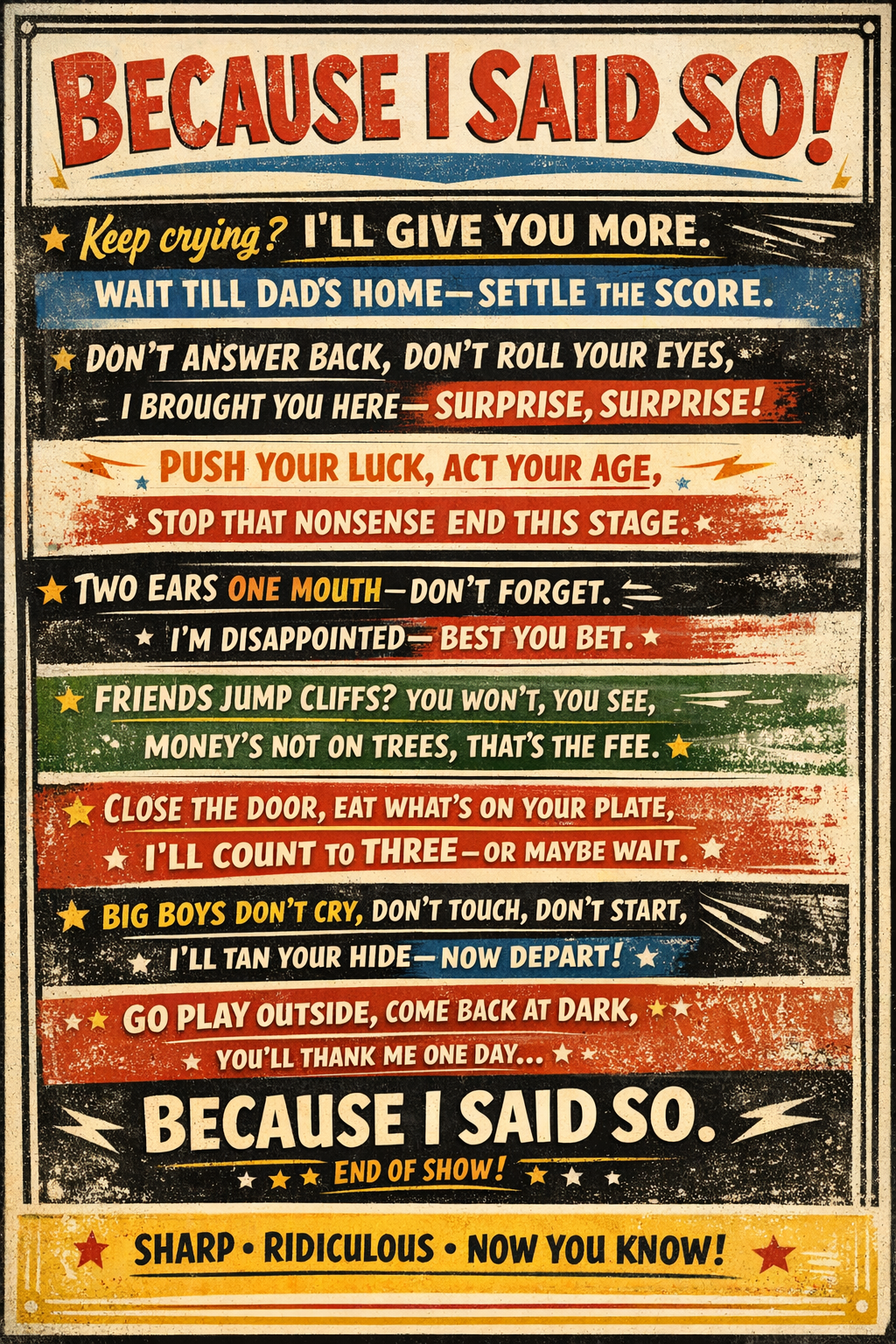
Step back far enough and you enter a linguistic museum. Not the polite, curated kind with plaques and interactive screens but a rough shed full of sharp tools still humming with use. This was a time when adults spoke in warnings, prophecies and beautifully unhinged one-liners that required no follow-up explanation. They weren’t suggestions. They were verbal weather systems. You heard them once and adjusted your behaviour accordingly.
This was the pre-therapeutic age of parenting, before feelings charts and laminated scripts, when authority was expressed not through tone-checking but through language so compact it could stop a child mid-stride. These phrases didn’t invite dialogue. They imposed gravity and gravity unlike a negotiation always works.
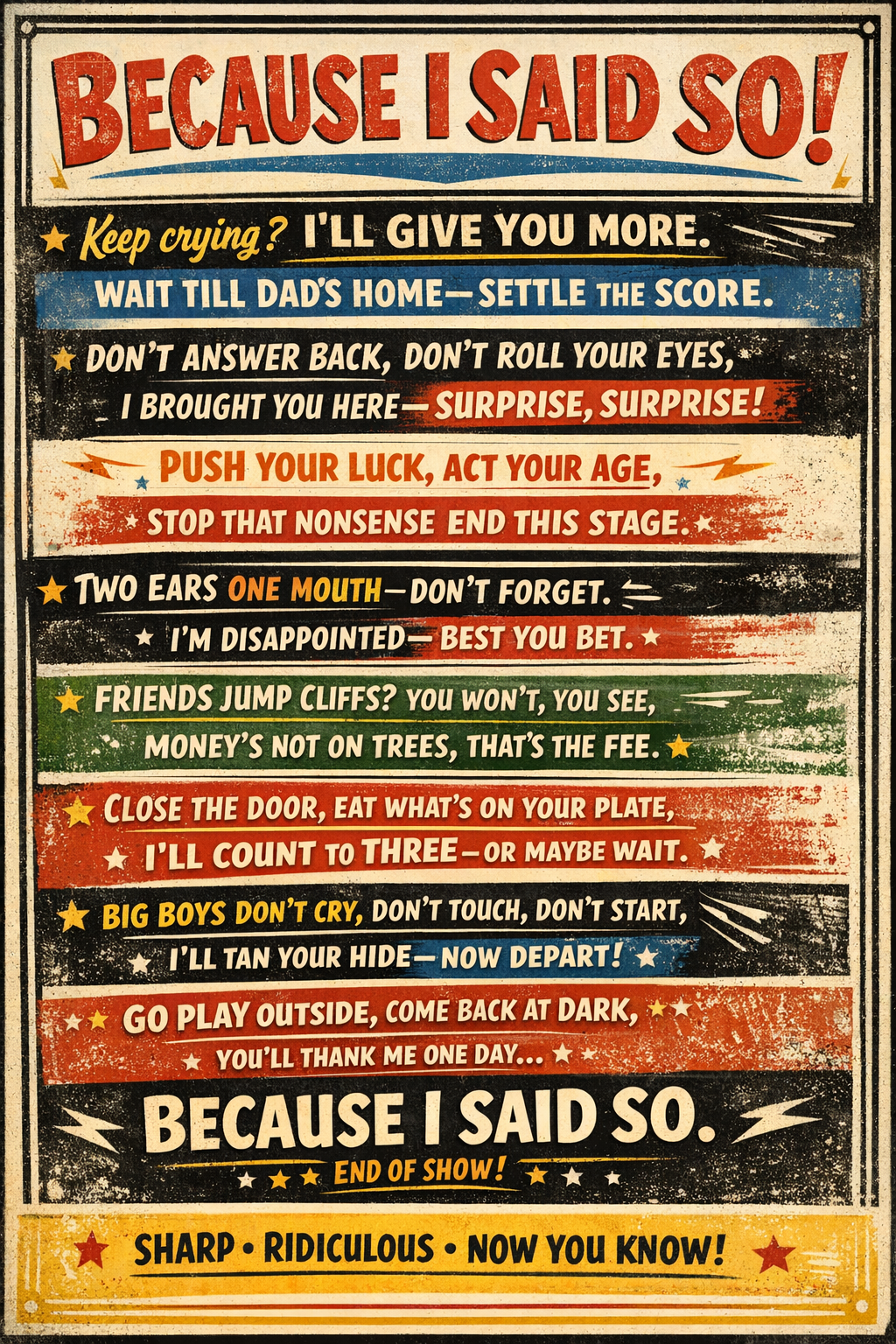
Take the opening gambit of escalation: “Keep crying and I’ll give you something to cry for.” You were already crying. That was the point. What followed was not specified, which was precisely why it was effective. The threat lived in the imagination where punishments are always worse. Modern parenting manuals would call it psychologically unsafe. They are not wrong. They are also missing the point. The phrase wasn’t designed to soothe; it was designed to stop behaviour, immediately with minimal verbal expenditure or consider the masterpiece of delayed dread: “Wait till your father gets home.” No shouting required. No follow-through visible. Just a time-release capsule of anxiety that forced you to spend the rest of the day auditing your entire existence. It taught cause and effect across hours, not seconds. That is not nothing.
Authority, in this language was non-negotiable. “Don’t you answer me back” was not a rebuke but a suspension of democracy. “Because I said so” was the original mic drop an assertion that explanation was a privilege, not a right. When an adult said “Act your age”, it didn’t matter that you had no idea how a seven-year-old was meant to act. The instruction wasn’t about clarity. It was about submission to a hierarchy you did not control.
Many of these phrases were structurally brilliant. “You’re pushing your luck” gave you no coordinates, only momentum. You didn’t know where the line was; you just knew you were approaching it at speed. “Stop that or you’ll regret it” weaponised the future, leaving regret undefined and therefore limitless. “Last warning” was rarely the last but it was treated as if it might be because the cost of being wrong was high.
Some lines were devastating precisely because they withheld anger. “I’m not angry, I’m disappointed” landed harder than any raised voice. Anger suggested heat; disappointment suggested judgement. It implied a moral ledger you had failed to balance. Decades later, people still flinch at the phrase which tells you something about its efficiency.
Others were casual in a way that now reads as astonishing. “I brought you into this world, I can take you out of it” was said while stirring dinner as if homicide were simply another household chore. No one questioned the logic. Children are not philosophers; they are risk managers. They heard the threat and recalibrated.
Then there were the aphorisms designed to shrink you. “You’ve got two ears and one mouth use them accordingly” taught hierarchy and silence in a single sentence. “Children should be seen and not heard” wasn’t advice; it was a mission statement. “You’re not hard done by” dismissed your suffering after a swift internal audit. The verdict was final.
Some phrases worked because they were absurd. “Don’t make me come over there” was issued by adults already standing right in front of you. It functioned as spiritual intimidation suggesting consequences beyond physical proximity. “I’ll count to three” created a ritualised countdown where one was calm, two was ominous and three never actually arrived because everyone folded at two-point-five. The threat was the counting, not the number.
Others were folk poetry. “If your friends jumped off a cliff, would you?” implied you were stupid enough to consider it and that peer pressure was a force to be resisted not explored. “Money doesn’t grow on trees” was deployed to refuse things that cost less than five dollars teaching scarcity through exaggeration. “Close the door, were you born in a tent?” was a question no one ever answered correctly because the answer didn’t matter.
Then there were the explicitly corporal lines, now spoken of in hushed tones. “You’ll get a skelped arse if you keep that up.” “I’ll tan your hide.” “That’ll learn you.” Grammar optional. Message received. These phrases belong to a harsher era and it would be dishonest to romanticise them. Some crossed lines that should never have existed. Some caused real harm. Acknowledging their effectiveness is not the same as endorsing their excesses.
What united all of them, however was certainty. These sentences carried weight because they were not provisional. They didn’t come with pamphlets, feelings check-ins or post-incident processing. They were blunt instruments of social order, passed down orally like folklore. You knew where the line was. You knew when you’d crossed it and you knew without a single emoji or family meeting that the adults in the room meant exactly what they said.
Modern parenting, at its best has corrected genuine cruelties. It has given children language for emotions that were once simply swallowed. That matters. But in sanding down every edge, it has also become allergic to authority itself. Certainty is treated as suspicion. Boundaries are negotiated into exhaustion. Adults explain until they disappear.
What those old phrases provided for better and worse was a shared grammar of limits. You didn’t need to agree with it. You just had to understand it and understanding in a child is often more stabilising than kindness without consequence.
The echo of that language still lives on. It surfaces every time someone mutters “Back in my day…” not as nostalgia but as recognition of a world where words landed like facts not invitations. Sharp, ridiculous sometimes unfair and unforgettable. Once you’ve learned that grammar you never quite unhear it.
“Because I Said So”
Keep crying and I’ll give you something to cry for,
Wait till your father gets home he’ll even the score.
Don’t you answer me back, not a peep, not a word,
I brought you into this world and that’s final, absurd.
You’re pushing your luck, so mind where you tread,
Because I said so enough said.
Stop that or you’ll regret it though what’s unclear
Act your age, my dear though no one knows what’s near.
Don’t make me come over there, I’m already too close,
You’ve got two ears and one mouth use them, God knows!
I’m not angry, I’m disappointed a dagger so sly,
You’ll understand when you’re older a lie in disguise.
If your friends jumped off a cliff, would you dare?
Money doesn’t grow on trees, so handle with care.
Close the door, were you born in a tent?
You’ll eat what you’re given, that’s the firmest intent.
I’ll count to three, though three never arrives,
Don’t roll your eyes I see all your lives.
You’re not hard done by, don’t complain or protest,
Children should be seen and not heard now go rest.
Watch your mouth yes, you just said that again,
I’m sick of telling you, but who’s counting when?
Go sit in the corner and think of your ways,
You’ll get a skelped arse no delay.
That’ll learn you, don’t start, you think it’s a game,
I’ll tan your hide, straighten up, fly right the same.
You’ve got a cheek on you, last warning beware,
Go outside and play but darkness will snare.
Big boys don’t cry, don’t touch, don’t defy,
I’ll knock you into next week, time-traveling sly.
You’ll thank me one day, though that day’s far away,
and still, every phrase echoes sharp, ridiculous and grey.
Because I said so.
Thanks for reading Awakened Voices! This post is public so feel free to share it.