The Brutal Truth About Why Your Children Don’t Respect You (And Why They Shouldn’t)
Respect is not an Inheritance
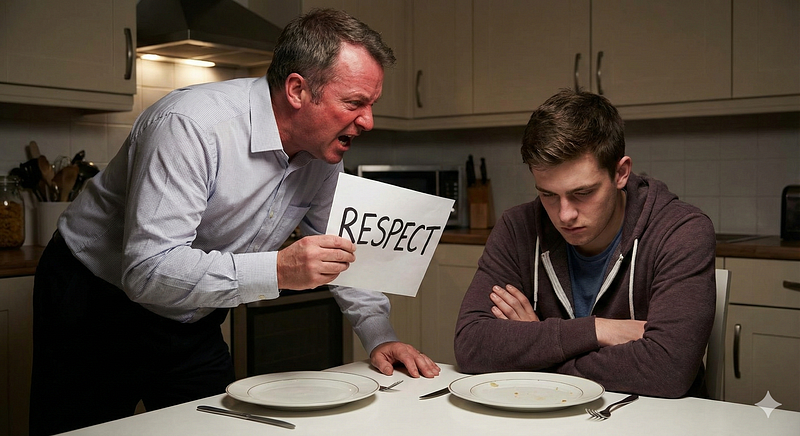
Respect is not an Inheritance
They stand at the head of the table and demand respect as though it were an inheritance, not a practice.
You’ve seen them. Maybe you had parents like them. Maybe, in your darkest, most exhausted moments you are them.
They speak the word “respect” like it’s a threat, not a value.
“Respect me,” they say, usually while shouting. Usually while belittling. Usually while manipulating the very people they brought into this world.
They demand reverence while lying. They demand honour while breaking promises. They ask children to carry emotional weights that would crush a linebacker and then they act shocked genuinely shocked when that respect never takes root.
Here is the uncomfortable truth that nobody likes to sit with at Sunday dinner: Children do not learn respect from lectures. They learn it from being respected an entire generation of adults is currently waking up to the realisation that they were never willing to offer the very thing they insisted on receiving.
The Great Confusion: Fear Is Not Respect
Let’s rip the bandage off immediately.
Most traditional parenting advice is built on a fundamental category error. We have confused fear with respect. We have confused obedience with integrity and we have confused silence with peace.
When a child goes quiet in the face of your rage, they haven’t become “respectful.” They have become terrified. They have learned that honesty is unsafe. They have learned that their voice is a provocation.
Fear produces compliance. It’s a survival mechanism. If you are big, loud and holding all the resources (food, shelter, love) a child will comply.
But obedience produces performance, not character.
If you rule by fear, you aren’t raising a good citizen; you are raising a hostage and hostages do not respect their captors. They endure them. They wait for the door to open. They wait for the day they are strong enough, rich enough or old enough to leave.
You cannot humiliate a child and expect reverence in return.
It defies the laws of human nature. You cannot scream “watch your tone” while your own voice is a weapon. You cannot preach accountability while refusing to apologise for your own outbursts. You cannot demand emotional maturity from a seven-year-old whose nervous system you have never once helped regulate.
You cannot withhold dignity and still expect loyalty to bloom.
The Hypocrisy of the “Do As I Say” Generation
Children are acute witnesses. They are the world’s most observant anthropologists.
They see the hypocrisy long before they have the vocabulary to name it. They notice when the rules apply only downward. They notice when:
- Apologies are extracted like teeth from them, but never offered by you.
- Love is conditional on how convenient they make your life.
- “Because I said so” replaces explanation, curiosity or care.
They notice when respect is treated as a throne you sit on, rather than a bridge you build between two souls.
Let’s be honest about where this comes from. Many adults confuse respect with control because control is what they were taught.
We have a generation of parents who were raised on hierarchy, not humanity. They were raised on power, not presence. They inherited wounds and were told to call it “discipline.” They were never shown how to repair a relationship; they were only shown how to dominate a room.
That context matters. We should have empathy for it. But hurt explains behavior; it does not justify passing it on.
If your boss screamed at you, belittled your intelligence and mocked your tears you wouldn’t say, “Wow, I really respect that guy.” You’d call HR. You’d quit. You’d hate him.
Why do we expect our children to have a higher tolerance for toxicity than we do?
The 5 Hard Lessons on Earning Respect
If you want respect that survives the teenage years and more importantly, survives into adulthood you have to stop demanding it and start building it.
Here is what that actually looks like.
1. Regulate Your Own Nervous System First
You cannot de-escalate a child when you are escalating the situation. If you are screaming, you have already lost. You are no longer the authority; you are just another chaotic force in the room. Respect is modeled in restraint. It’s the pause between the trigger and the reaction. It is choosing steadiness over intimidation.
2. Apologise When You Are Wrong (And You Will Be)
This is the ultimate cheat code for respect and almost no one uses it. When you lose your cool, when you forget a promise, when you accuse them unfairly own it. Out loud. Without a “but.” “I was frustrated and I yelled. That was wrong of me. I am sorry. I’m going to try to do better next time.” This doesn’t make you weak. It makes you safe. It teaches your child that mistakes are part of being human and that repair is possible.
3. Listen Without Interrupting
How often do you listen to your child to understand them rather than listening just to correct them? Respect looks like listening without formulating your rebuttal while they are still speaking. It looks like validating their feelings even if you disagree with their behavior. “I can see you’re really angry about this” is a sentence that builds more bridges than “Stop crying or I’ll give you something to cry about” ever will.
4. Boundaries Without Cruelty
You can hold a boundary without being mean. You can take away the iPad, enforce the curfew or say no to the candy without attacking their character. “You are grounded because you broke the rule” is parenting. “You are grounded because you are a liar and you make my life miserable” is emotional abuse. The former invites a lesson. The latter invites shame.
5. Drop the “Inheritance” Mindset
Respect is not claimed by age or title. It is cultivated through conduct. Daily. Consistently. Especially when you are tired. Especially when you are triggered. Especially when you are wrong.
The Quiet Reckoning
There is a phenomenon happening right now. You see it in forums, in therapy offices and in the silence of empty nests.
We are seeing a wave of adult children who don’t call. Who don’t visit. Who keep conversations shallow, guarded and brief.
Parents call it ingratitude. They call it a generational flaw. They say, “After everything I did for you.”
But more often, it is simply memory.
It is a lifetime of being talked at instead of spoken with. It is the long consequence of never being met as a person. It is the result of a parent who prioritised being “right” over being connected.
The bill always comes due.
The “good” child who was silent and compliant grows up to be the adult who realises that the only way to protect their peace is to stay away from you. The “rebellious” child grows up to be the adult who realised you were never safe enough to be vulnerable with.
The Takeaway
If you are reading this and feeling defensive, that’s natural. It hurts to look in the mirror but if you are reading this and feeling a pit in your stomach, that’s hope. That’s the part of you that knows there is a better way.
It is not too late to change the dynamic. It is not too late to sit down with your child whether they are five or forty-five and say, “I think I’ve been getting this wrong. I want to respect you and I want us to figure out what that looks like.”
Respect is not an inheritance. You don’t get it just because you donated the DNA.
Respect is a garden. It grows where dignity lives and children even the very small ones can always, always tell when it doesn’t.
Stop demanding it. Start earning it.
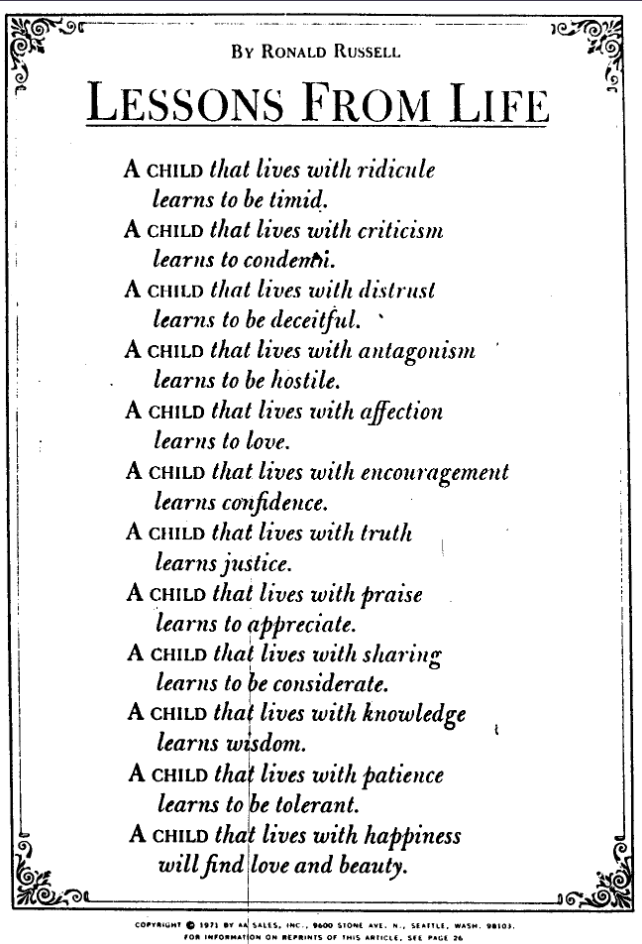
Did this strike a nerve? Good. That means we’re getting somewhere. Share this with someone who needs the reality check or drop a comment below if you’ve been on either side of this dynamic.