Still Waiting
What animal abandonement reveals about us, Not them.
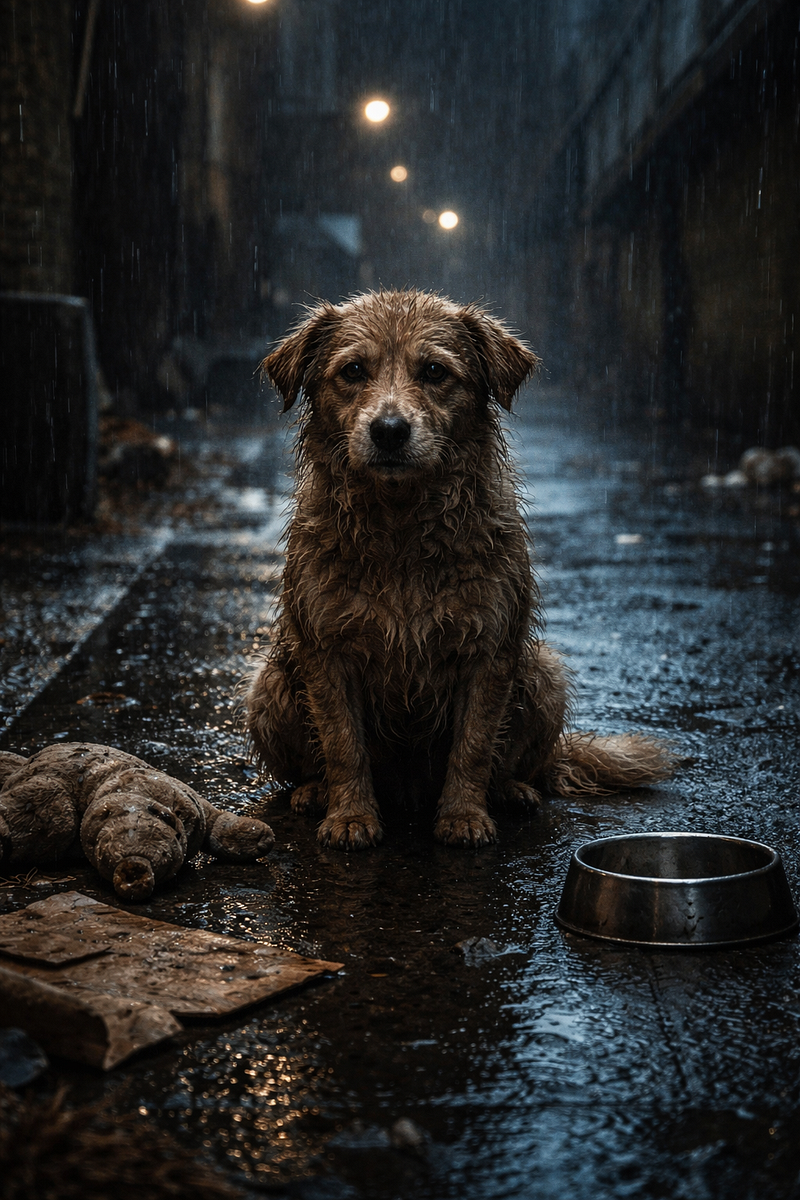
What animal abandonement reveals about us, Not them.
The lie we tell ourselves is that animals “move on”.
They don’t. They wait.
They wait in the place they were last certain of you. They wait because consistency is how safety is learned and safety once learned is not easily unlearned. When a human disappears without explanation, the animal does not interpret this as a choice or a circumstance. It interprets it as a rule it must still obey. Stay. Don’t make it worse.
This is not sentiment. It is biology.
Domestic animals evolved to attach to us as a survival strategy. Dogs, in particular have been selectively bred for tens of thousands of years to read human faces, follow human cues, synchronise their stress responses to ours. Cats, though more independent, still form strong attachment bonds and experience measurable stress when those bonds are broken. Separation elevates cortisol levels, suppresses immune function, disrupts sleep and alters behaviour in ways indistinguishable from trauma responses observed in humans.
When you abandon an animal, you don’t simply remove food and shelter. You remove the organising principle of their world.
The first phase is vigilance. The animal scans every sound, every shadow. Hope becomes a physical posture head lifted, muscles tensed, eyes locked on the possibility of your return. This state is metabolically expensive. It cannot be sustained. When days stretch into nights, vigilance collapses into exhaustion and exhaustion into something deeper: learned helplessness. A condition first identified in laboratory animals, where repeated uncontrollable loss teaches the nervous system that effort is pointless.
This is why abandoned animals often appear “shut down”. It is not calm. It is resignation.
Hunger arrives quietly because bodies prioritise survival over complaint. Thirst does not. Dehydration is pain. Exposure is pain. Fear is pain. Sleep becomes dangerous because sleep assumes protection and protection is gone. The animal learns quickly that no one is guarding them anymore.
People pass. Some avert their eyes. Some offer nervous sympathy without stopping. Some joke to deflect their discomfort. None speak the animal’s name, because they don’t know it. Names anchor identity. Without one, the animal begins to disappear even to itself. Behavioural studies show that social animals deprived of stable recognition exhibit withdrawal, increased startle responses and a collapse in exploratory behaviour. The world becomes too big. The body becomes very small.
What is often misunderstood is this: animals do not reframe abandonment as betrayal. They internalise it as failure.
Attachment theory applies across species. When a bond breaks without cause the animal can comprehend, the assumption is not you left but I did something wrong. Loyalty, to an animal is not conditional. It is a given. When it does not protect them, they do not question loyalty; they question themselves.
Humans explain abandonment with language necessary, complicated, unavoidable. Animals have no such insulation. They experience only the outcome: love was real, then it was gone and because love to them, is permanent by default, its disappearance is experienced as annihilation.
This is why shelters are full of animals who are not “problematic” but broken-hearted. Why some stop eating. Why some cannot be rehomed because their nervous systems no longer trust consistency. Trauma leaves signatures. It settles into the eyes, into posture, into the way the body flinches before the mind can intervene. Animals recognise it in one another instantly. It is the look that says: I trusted once. I won’t survive that again.
The moral discomfort people feel reading this is not accidental. It is the friction between how we like to narrate ourselves as caring, practical, humane and what abandonment actually is: the unilateral termination of a dependency relationship where the dependent has no capacity to consent, understand or recover on equal footing.
We would not accept this logic applied to any other vulnerable being. We excuse it with animals because they cannot speak back in our language, because their suffering is quiet, because it unfolds offstage.
But quiet suffering is still suffering.
If an abandoned animal dies, it does not die angry. It dies confused. It dies believing it failed a test it did not know it was taking. That is the final cruelty not the hunger or the cold, but the unanswered question lodged in the body: Why wasn’t I enough to keep?
If this is hard to read, that is the point. Discomfort is the signal that something true has landed. Sit with it. Don’t dilute it with reassurance or distance. The pain you feel now is only a shadow of what animals live with when we decide that love can be temporary without consequence.
Because even when starving, cold and afraid an animal may still listen for the sound of the engine. Not because it is foolish, but because love once given does not know how to stop breathing.
That is not weakness.
That is what we trained into them.
It is why we are responsible for what happens when we walk away.