Plastic Chairs and Instant Coffee: The Unexpected Truth of the Spiritualist Church
You could drop a pin in a backstreet of Birmingham, a coastal town in New South Wales or a quiet Midwestern suburb in the United States…
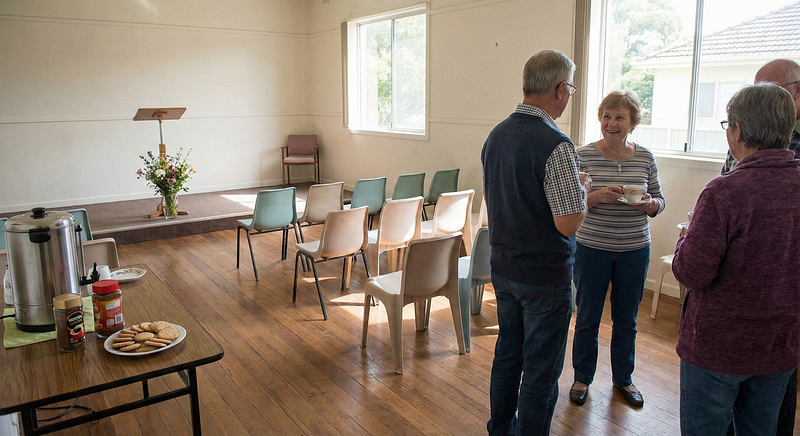
You could drop a pin in a backstreet of Birmingham, a coastal town in New South Wales or a quiet Midwestern suburb in the United States step into a modest hall marked Spiritualist Church and feel the same unmistakable atmosphere settle around you. Different accents. Different cups of tea or coffee depending on the continent. But the same intent. The same quiet gravity. The same unspoken understanding that what happens inside these walls is not performance but purpose.
Spiritualist churches across the UK, the USA and Australia share a common lineage and an even deeper common philosophy. They were born from the same nineteenth-century movement that dared to say something radical for its time: consciousness survives physical death and ordinary people can experience that truth directly. Not through priests or dogma but through evidence, personal responsibility and lived experience.
In the United Kingdom, where modern Spiritualism took root churches often feel steeped in history. Many operate out of Victorian buildings or long-standing halls where generations have gathered to test, question and refine mediumship. The Spiritualists National Union (SNU), founded in 1901 still acts as a guiding authority setting ethical and educational standards while deliberately avoiding rigid belief systems. British Spiritualism has always insisted on one thing above all else: don’t believe know. Evidence matters. Integrity matters. The work is meant to comfort the living not glorify the medium.
Cross the Atlantic and you find the same philosophy adapted to American soil. In the United States, Spiritualist churches often sit alongside independent camps and communities such as Lily Dale, Cassadaga and Camp Chesterfield places where mediumship, healing and spiritual philosophy are woven into daily life. Governance may be more decentralised, the tone sometimes more expressive, but the core remains unchanged. Services follow familiar rhythms: an opening address, a philosophical talk, mediumistic demonstrations and communal reflection. The aim is constant to demonstrate the survival of consciousness and empower individuals to seek truth for themselves.
In Australia, Spiritualist churches carry a similar humility to their British cousins, shaped by distance, resilience and community necessity. Often found in community halls, demountables or converted buildings they tend to be small, fiercely dedicated and quietly inclusive. The Spiritualists National Union of Australia (SNUA) maintains alignment with the original SNU principles while responding to the realities of a vast country with limited resources and enormous geographic spread. Here, churches frequently become lifelines places where grief, intuition and spiritual experience can be spoken aloud without ridicule.
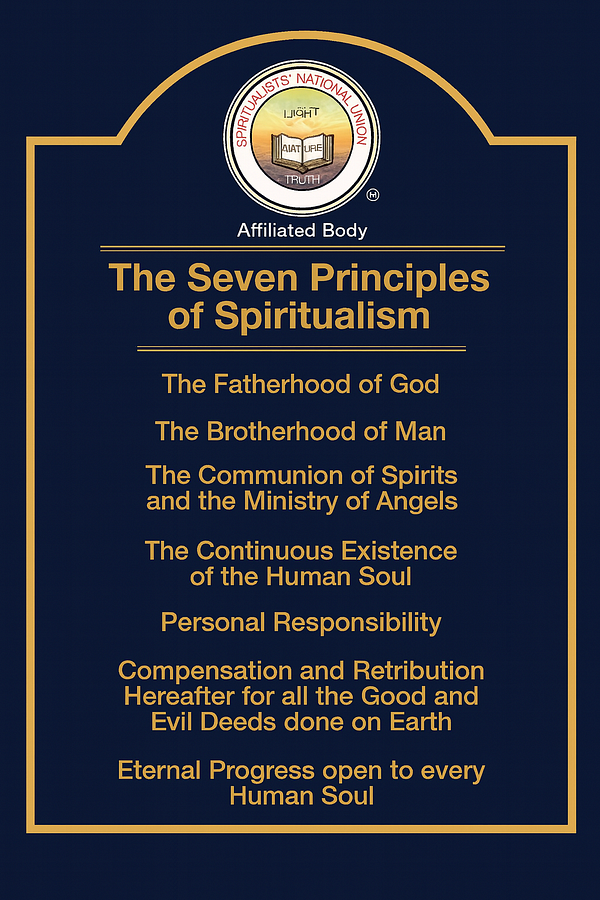
At the heart of all of this sit the Spiritualist Principles. They are not commandments but guiding statements, philosophical anchors rather than rules. They remind us that we are responsible for our actions, connected to every living being and capable of communication with the spirit world because life does not end it changes. These principles are not wielded as doctrine. They are returned to quietly and consistently keeping the focus on evidence, ethics and service.

Walk into a service and the myths fall away quickly. There are no theatrics. No smoke. No spectacle. What you’ll see instead is a working medium offering their best evidence of survival not to impress but to help. Many of these mediums give their time freely. They are not paid performers; they are volunteers often travelling long distances, preparing carefully and standing on platform week after week purely out of dedication to service. Their commitment is rarely visible from the outside yet it is the living spine of these churches.
You’ll hear a short philosophical address sometimes eloquent, sometimes plainspoken, always grounded. There may be a prayer, a poem or a shared silence that lands deeper than words and then there is the kettle. Conversations unfold over tea between people who arrived as strangers and leave feeling unexpectedly understood. That is the secret of these small rooms. They become sanctuaries not because of anything supernatural in the décor but because of who they hold: people who are searching, hurting, growing or trying to make sense of experiences mainstream culture has no patience for.
Behind the scenes, these churches are almost always sustained by one or two private individuals who shoulder the responsibility quietly. They hire the halls, pay the insurance, organise speakers, set out the chairs, clean up at the end and often absorb the costs themselves when funds fall short. There are no large institutions propping them up no corporate sponsors smoothing the way. What keeps the doors open is participation.
This is why the moment when the basket is passed matters more than many realise. It isn’t a transaction. “Donation” doesn’t quite fit. It is an energetic exchange a recognition that what you are receiving has been made possible by time, labour and care. That exchange is what allows these spaces to exist but as living communities. Without it, the lights go out the hall is lost and something quietly vital disappears.
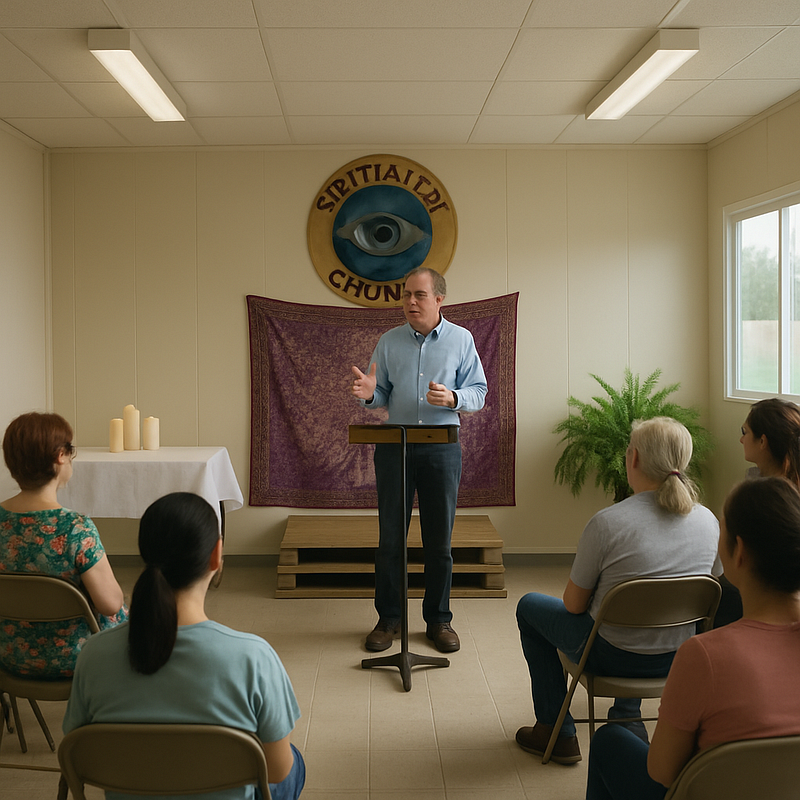
You don’t have to be a believer. You don’t have to understand mediumship. You don’t need to perform spirituality in any curated, Instagram-friendly way. All that’s required is your humanity. The door opens you take a seat and the room seems to absorb you as though you were meant to be there and yes if you’re waiting for levitation you’ll be waiting a very long time. The closest you’ll get is a fern wobbling on a folding table when someone brushes past it. No smoke machines. No mirrors. No theatrics. Just ordinary people in ordinary buildings facing the most extraordinary questions we ask as human beings together.
Whether in London, Los Angeles or Logan, Spiritualist churches offer the same promise: not certainty not spectacle but companionship. They remind us that spirituality does not require grandeur only sincerity. That wisdom can live in a rented hall. That healing often arrives in shared silence, gentle truth and the quiet dignity of service freely given.
So if you ever find yourself hesitating outside one of these unassuming doors but something subtler may rise: a softening of grief, a sense of belonging or the quiet recognition that you are not alone in wondering what comes next and sometimes that is the most profound revelation of all.