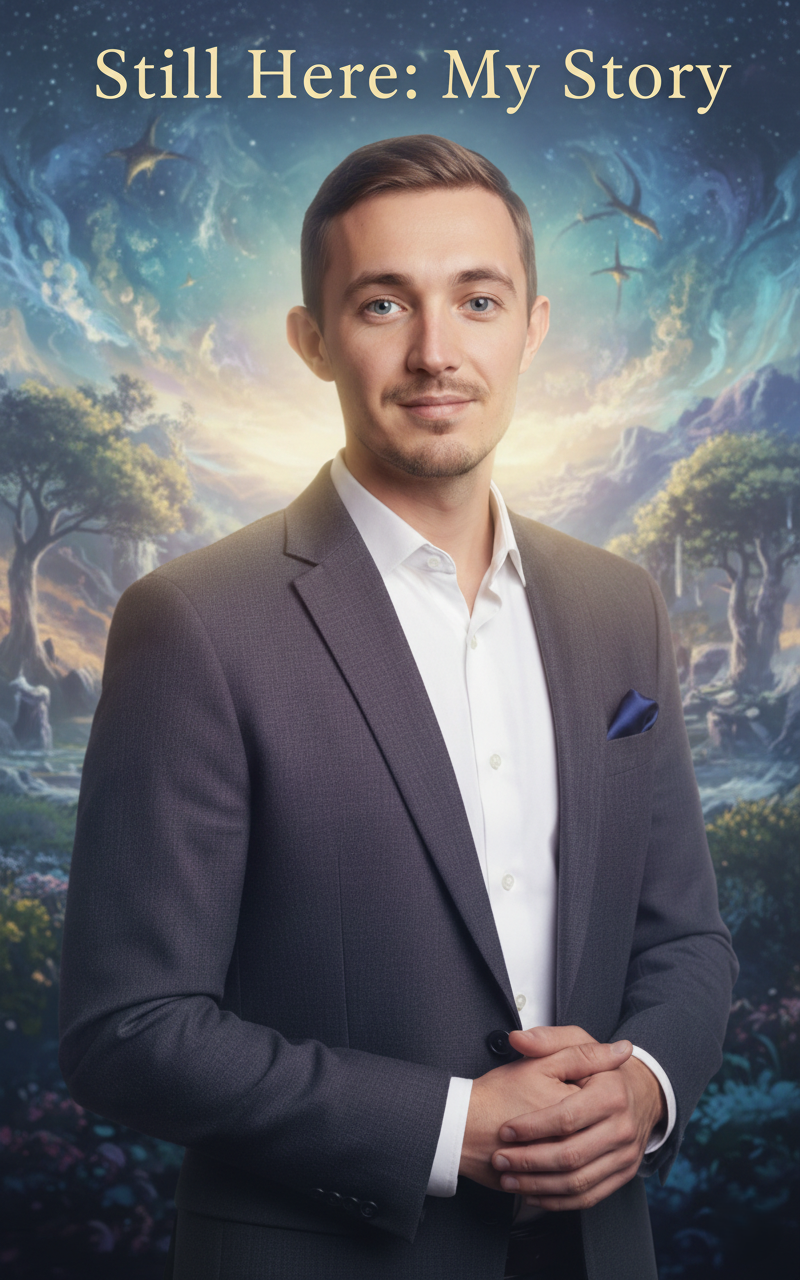
From Survival to Sacred: How Death Taught Me to Choose Life
A journey through loss, addiction and the quiet strength that grows where childhood should have been
A journey through loss, addiction and the quiet strength that grows where childhood should have been
The Wisdom of Endurance
There is a particular kind of wisdom that only comes through endurance. Not the wisdom found in books or passed down at stable family dinners, but the deep, bone-level knowing that emerges from surviving what should have destroyed you. This is the story of how death became my earliest teacher, how absence shaped my understanding of presence and how carrying impossible weight built a strength I never asked for but have learned to honour.
When Loss Becomes Your First Language
My relationship with death began before I had words for it. At four years old, I experienced my first loss not as a concept adults would later try to explain, but as something my body simply knew had changed forever. A child had died. I was a child too and in that moment, something irreversible shifted in how I understood the world.
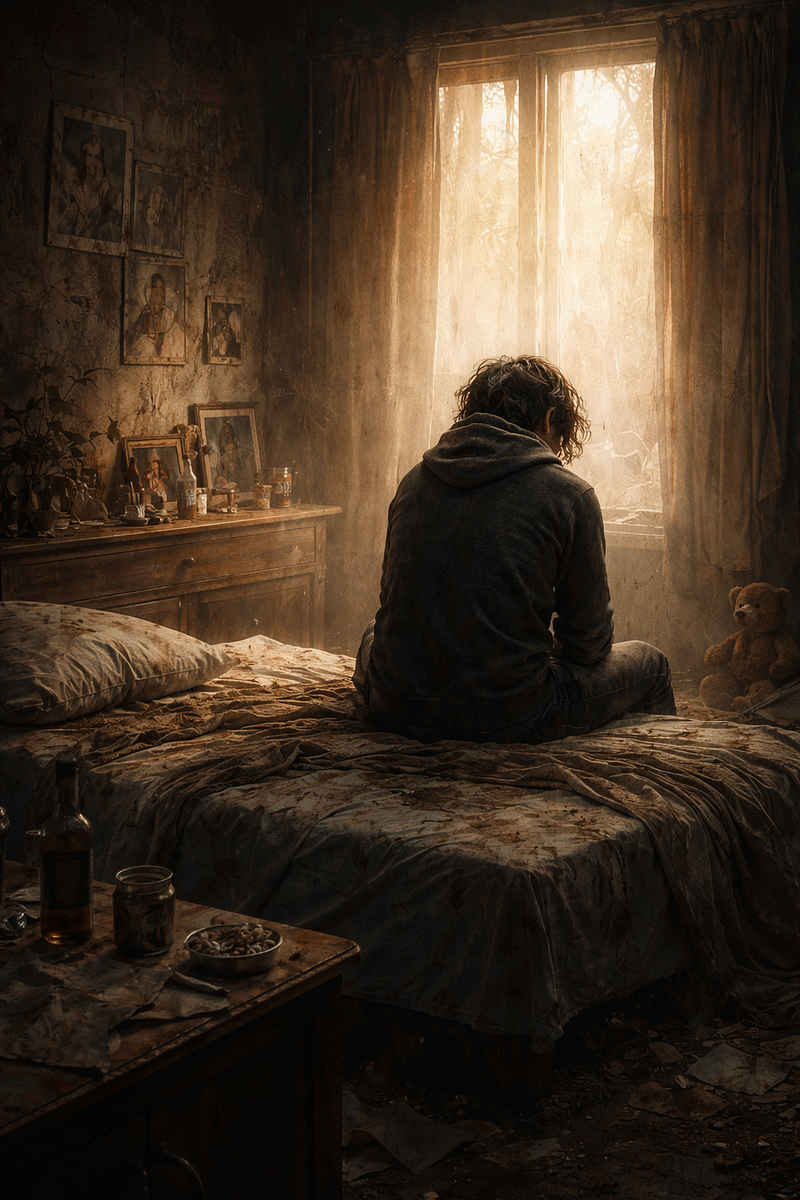
Then death kept coming: a sibling, close family members, grandparents. Each loss arrived before the previous one had time to settle into understanding. Grief did not move in waves for me; it stacked like sediment, layer upon layer, until loss stopped feeling like an event and became the very atmosphere I breathed. While other children built their lives on routines and continuity, I was learning the grammar of goodbye, the weight of silence and the slow recalibration that follows every unexplained disappearance.
Eventually, I realised that death was not just taking people away it was hollowing out those who remained. My parents were still breathing, still technically present, but addiction was consuming them from the inside. Addiction is death in slow motion, demanding witnesses to its devastation. It dismantles parents in front of their children and leaves behind something far heavier than absence: responsibility.
The Strength You Never Asked For
I became a parent to my parents long before I understood what that meant. When the adults in your life collapse inward, children step outward instinctively. You learn to read moods before they explode. You anticipate chaos before it arrives. You carry burdens you have no language for, no map to navigate, no permission to put down. Childhood does not end with a single dramatic moment it erodes quietly, replaced by competence you never chose and resilience you never wanted.
By the time I was old enough to notice, I had already become the odd one out: the black sheep, the middle child, the one who somehow absorbed the brunt of everything that went wrong because families unconsciously distribute their pain and someone always has to carry the heaviest load. These labels might sound like harmless shorthand, but they are roles and roles are how dysfunction survives. Someone must be the lightning rod. Someone must hold what others refuse to see.
What grows in that position is a particular kind of quiet strength not the loud, celebrated resilience that gets applauded in motivational speeches, but a steadier, lonelier endurance. When you are born into chaos, you develop an almost supernatural ability to read rooms, stay upright under pressure and function without reassurance or guidance. You become competent before you are ever protected. That strength is real but it comes at a cost no child should have to pay.
The Truth That Changed Everything
My parents are both gone now my mother since 2019, my father since 2024. Death eventually finished what addiction started and still I find myself sorting through the debris not just of their possessions, but of their choices, their unresolved pain, their damage that never got healed. Death does not end responsibility when addiction weaves through a family; instead, it hands you an unpaid bill for emotional debts you never incurred.
For years, I carried a belief that felt like the only logical explanation: I must be unlovable. When death kept arriving, when people disappeared, when the ones meant to stay either died or dissolved into their addictions, turning the blame inward felt safer than facing the alternative. Children do this instinctively. If the world keeps leaving you, your mind searches desperately for a reason it can control. “It must be me” becomes preferable to “the adults failed” or “life can be cruel without reason.”
That belief settles quietly and organises everything around it. You expect less. You tolerate more. You stop asking for help because asking only confirms the absence of answers. When love feels temporary and conditional, you stop trusting it exists at all.
But here is what transformed everything: repetition is not proof. Trauma is not a verdict. When loss clusters early and often, it reveals nothing about your inherent worth and everything about the environment you were born into. Addiction, instability and unresolved grief do not distribute pain fairly they simply land where they can, often on the youngest, the strongest, the ones most able to absorb impact.
The Healing in Honest Truth
Here is what I can hold true now, what I could not see before: loving my parents dearly does not require denying the harm they caused. Grief and accountability can exist in the same breath. Naming damage is not betrayal it is clarity. It is the only way to stop carrying lies alongside loss.
I can acknowledge that my parents loved me in the fragmented, distorted way that people damaged by their own pain know how to love and I can also acknowledge that their love was not enough to protect me from the consequences of their choices. Both things are true. Both matter. Holding both is how healing begins.
The family that remains is not always the refuge we hope for. Sometimes toxicity survives in quieter forms after the loudest chaos ends. At a certain point, a truth emerges that feels brutal until it settles into honesty: some people are alive but dead to your future. Not from cruelty, but from necessity. You cannot heal in the same environment that taught you to break.
This is why I walk much of this life on my own not because I am unlovable, not because I failed to belong, but because belonging came with costs I can no longer afford. I was trained to carry others, absorb damage and stay functional while everything collapsed. Learning to put that weight down takes time, distance and the courage to choose solitude over familiar harm.
Building What Was Never Modeled
Understanding what truly happened did not erase the pain. It did not undo years of internalised doubt or magically restore what was lost. But it did something quieter and infinitely more important: it restored accuracy. I stopped confusing abandonment with truth. I stopped treating absence as a mirror of my worth. I understood that what happened to me was not evidence of my defects it was evidence of my extraordinary capacity to survive environments that could not sustain themselves.
That understanding became the thin line everything else balances on. Without it, silence might have swallowed me. With it, I can speak, remember and build something new without asking permission from the past.
I am slowly figuring it out not through neat revelations or redemptive story arcs, but in fragments: moments of clarity, boundaries held, patterns finally named and released. Death shaped my early life profoundly but it does not get to define how the story ends. What remains now is not emptiness but space space to construct something that was never modeled for me, space to live without constantly bracing for the next loss, space to choose life even after death made itself feel like home.
The Sacred in Survival
There is profound spiritual significance in what happens when you survive the unsurvivable. When you are forced to parent yourself and your parents, when death arrives before you understand it, when addiction steals the people meant to protect you, something sacred can emerge from that crucible. Not because the pain was necessary or deserved, but because you chose to transform it rather than transmit it.
This is the work I am developing now the space I hold for others who carry similar scars. As a spiritualist and medium, I understand that the veil between worlds becomes thin for those of us who lived too close to death too early. That proximity gave me gifts I never asked for but have learned to honor: the ability to hold space for grief, witness pain without flinching and guide souls to reconnect with their inner power precisely because we have to excavate our own trauma from beneath layers of inherited trauma.
Every moment I help someone understand that their survival is not a flaw but a testament these are not separate from my story. They are the continuation of it. They are how I turn the weight I carried into medicine for others.
Choosing Life After Death
I did not choose these cards. Few people do. But I am done pretending they did not leave scars and I am profoundly done carrying what was never mine to begin with. There is quiet, sacred strength in surviving this much and still choosing to stay. Still choosing to become. Still choosing life, even after death made itself feel like home.
If you are reading this and recognizing yourself in these words if loss came too early, if you became the parent when you needed parents, if you have spent years wondering what was wrong with you when the truth is that everything was wrong with the situation I want you to know something: your survival is evidence of your strength, not your deficit. The fact that you are still here, still trying, still capable of feeling after everything tried to numb you, is extraordinary.
The journey from “I must be unlovable” to “I outlasted what should have destroyed me” is not a straight line. It is full of setbacks, doubt and days when the old story feels more true than the new one. But every step forward matters. Every boundary held matters. Every moment you choose yourself over familiar pain matters.
You were not born broken. You were born into brokenness and carried weight that was never yours and you are still here. That is not just survival. That is sacred.
The Beginning, Not the End
This story exists not because the pain ended, but because the lie did. The lie that said I was too much, not enough, fundamentally flawed, destined for abandonment. That lie died and in its place something truer emerged: I am strong because I had to be. I am wise because I suffered. I am compassionate because I know what it means to be broken and choose to stay anyway.
Death has been my teacher, but life is my choice now and that choice made daily, sometimes moment by moment is where the real magic lives. Not in erasing what happened, but in refusing to let it be the only thing that happened. Not in pretending the scars do not exist, but in understanding that they are proof of healing, not failure.
The journey continues. The work continues. The choosing continues and somewhere in that continuous choosing lies freedom not from the past, but from the prison the past can become if we let it define our future.
You are not your trauma. You are what you build in spite of it and if you are still here, still reading, still trying, you have already won the hardest battle. Everything else is just learning to live like someone who deserves the life they fought so hard to keep.
The veil is thin. The magic is real and your survival is the most sacred thing of all.
This is not where the story ends. This is where it truly begins.