A Nation at The Edge of Itself
Identity, integration and the uneasy tension between belonging and becoming in modern Australia
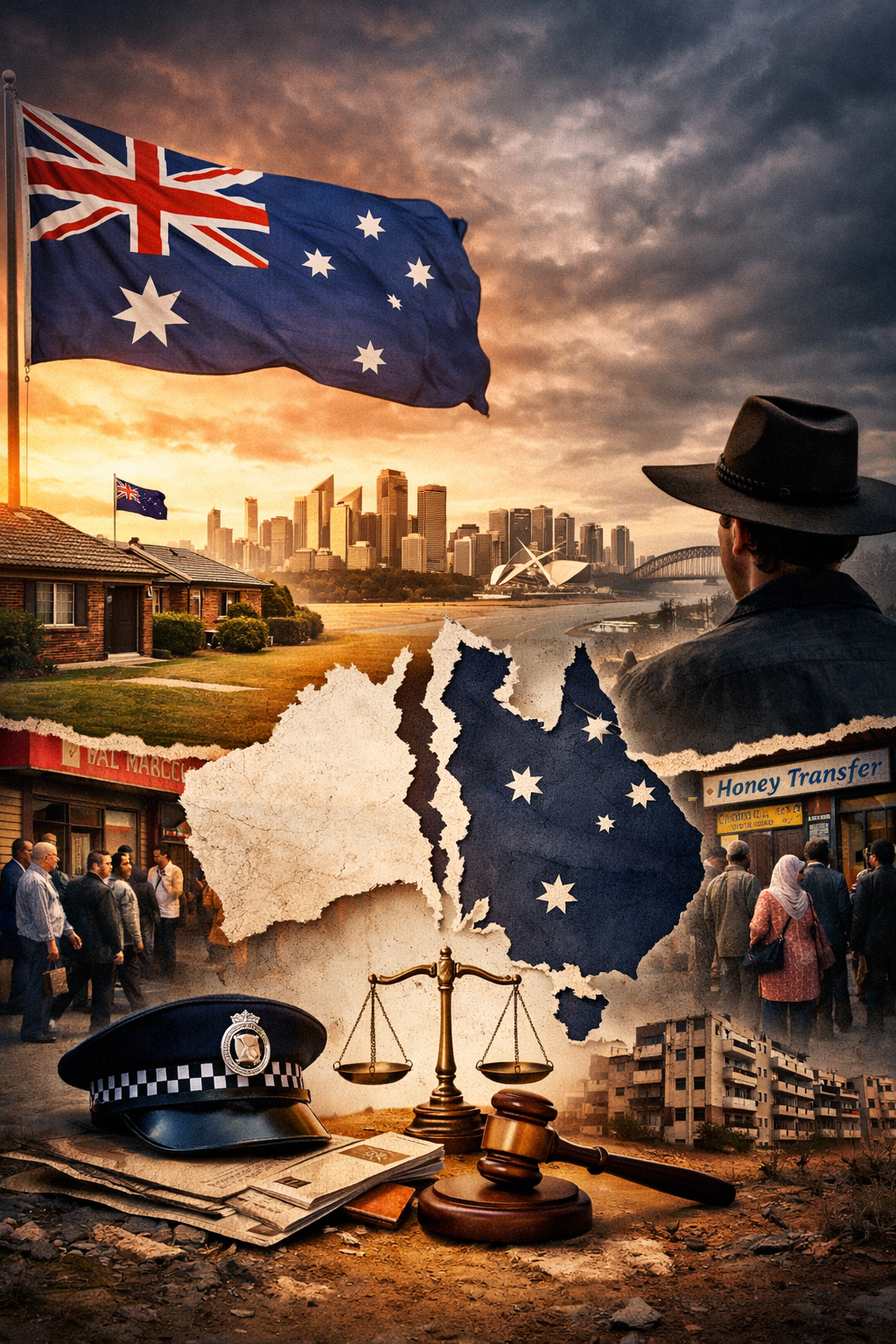
Identity, integration and the uneasy tension between belonging and becoming in modern Australia
Anger is never abstract. It is born in specific rooms, in real encounters, in moments where trust is broken and something inside you hardens. When people speak bluntly about race, immigration and national identity in Australia, they are rarely speaking about theory. They are speaking about experience.
I have met decent people and I have met scumbags. Some of the worst behaviour I have witnessed has come from white Australians. Some of the worst behaviour I have witnessed has come from migrants who arrived here seeking opportunity. The common thread has never been skin colour it has been conduct and yet, when patterns of behaviour cluster in certain environments certain suburbs, certain social dynamics it is human to start asking whether something larger is shifting beneath the surface.
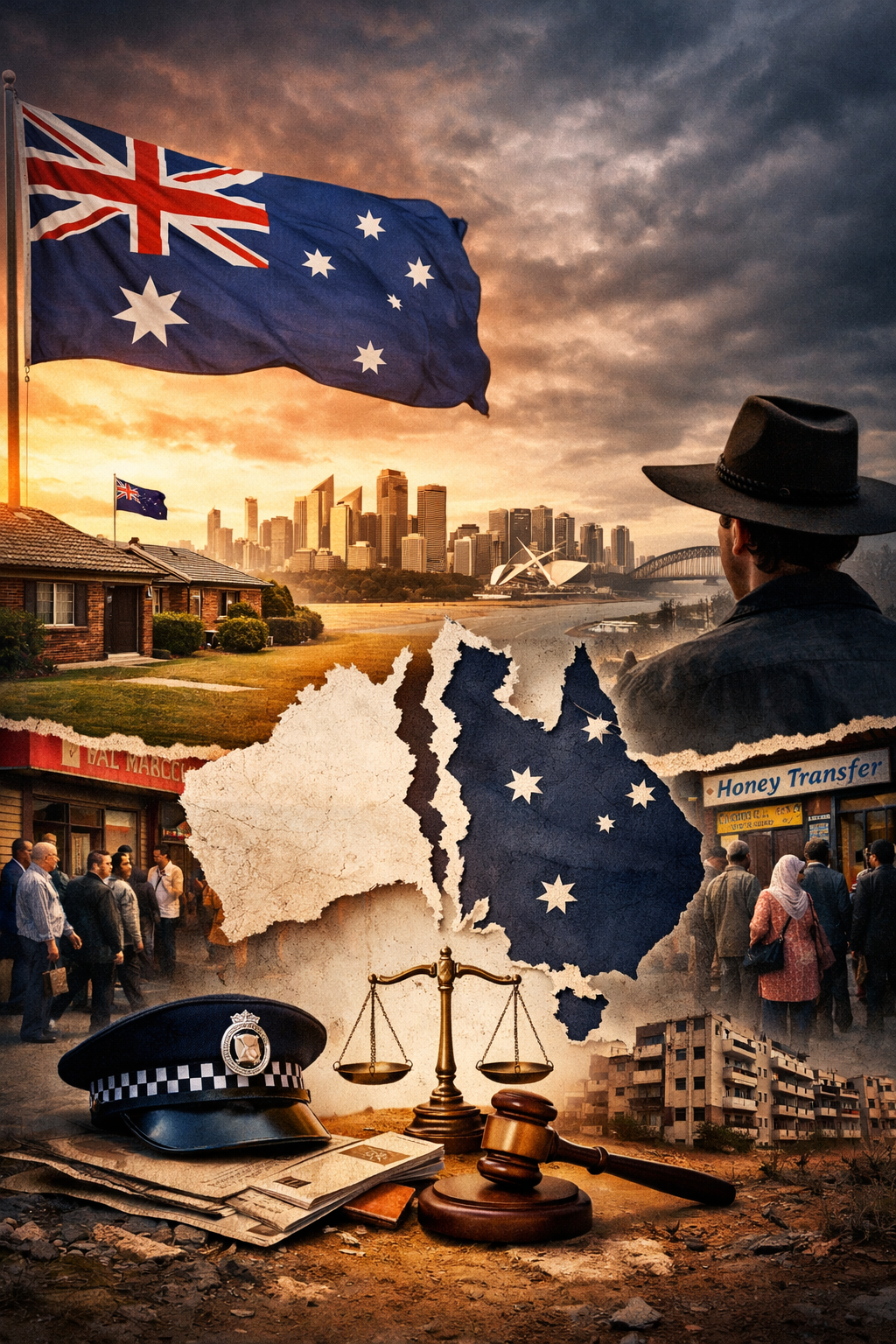
Australia is not a static idea. It has always been a contested one. Waves of migration have shaped it. Economies have risen and strained. Cultural norms have evolved. With each shift comes tension and that tension is not a sign of failure it is a sign of a country still becoming. The question is not whether migration is good or bad in the abstract. The question is whether a nation can absorb change at a pace that maintains social cohesion, shared standards and mutual accountability.
For many Australians, the anxiety is not about difference. It is about integration. It is about whether newcomers genuinely adopt the civic framework our legal structures, our expectations around gender equality, secular governance, freedom of speech, the rule of law or whether parallel systems quietly take root. A country cannot function if its laws are optional or selectively applied. Unity does not require uniformity but it does require agreement on the fundamentals.
This is where political allegiance enters the conversation. Support for parties like One Nation is often dismissed as reactionary or prejudiced. Yet for some voters, it represents something far simpler: a demand for clearer borders, more measured intake, stronger enforcement and a belief that national identity is worth preserving. Whether one agrees with every policy position is secondary. The appeal lies in the insistence that cultural stability is not a luxury it is a foundation.
None of this erases a crucial truth: moral failure is not racial. Corruption, violence, exploitation, generosity, discipline these are human traits distributed across every ethnicity and every era of history. To reduce vice or virtue to colour is intellectually lazy and historically dangerous. But it is equally dishonest to silence legitimate concerns about integration, crime, economic strain or social fragmentation simply by labelling them as racism. Shutting down the conversation does not resolve the tension. It pressurises it.
A mature nation must be able to hold two realities at once. Australia benefits enormously from migration. Australia also has limits economic, infrastructural, psychological. Compassion without boundaries destabilises. Boundaries without compassion calcify. Neither extreme serves the country well and pretending otherwise is its own form of cowardice.
The conversation we need is not one of blame but of standards. What does it actually mean to become Australian? Is it merely residency and paperwork or is it participation in a shared civic culture a genuine inheritance of the responsibilities that come with the rights? If someone comes here, prospers here and builds a life here they also inherit an obligation to uphold the framework that made that prosperity possible. That expectation is not hostility. It is reciprocity.
Equally, long-established Australians hold no monopoly on decency. Bad behaviour does not arrive on boats it is home-grown as well and always has been. Integrity must be demanded universally, not selectively deployed as a political convenience.
Political frustration is often a proxy for something deeper: a sense that the social contract is quietly fraying. Housing feels unaffordable. Services feel stretched. Neighbourhoods feel unfamiliar. People interpret that disorientation differently some respond with openness, others with defensiveness but both reactions spring from the same instinct: the desire to protect stability and pass something worth inheriting to those who come after.
Australia stands at a crossroads familiar to many Western democracies. It must decide how to balance diversity with cohesion, growth with sustainability and freedom with responsibility. Shouting across ideological lines will not solve it. Honest standards applied without fear or favour might.
The future of this country will not be determined by race. It will be determined by whether we can insist, without apology, on shared laws, shared accountability and a shared commitment to the common good. Everything else is noise.
Thanks for reading Awakened Voices! This post is public so feel free to share it.